AI Reporting: The Next Step in Wealth Management
Wealth management has spent years becoming more digital. Yet one of its most basic client-facing functions — reporting — still has a problem. This is where AI starts to change the equation.
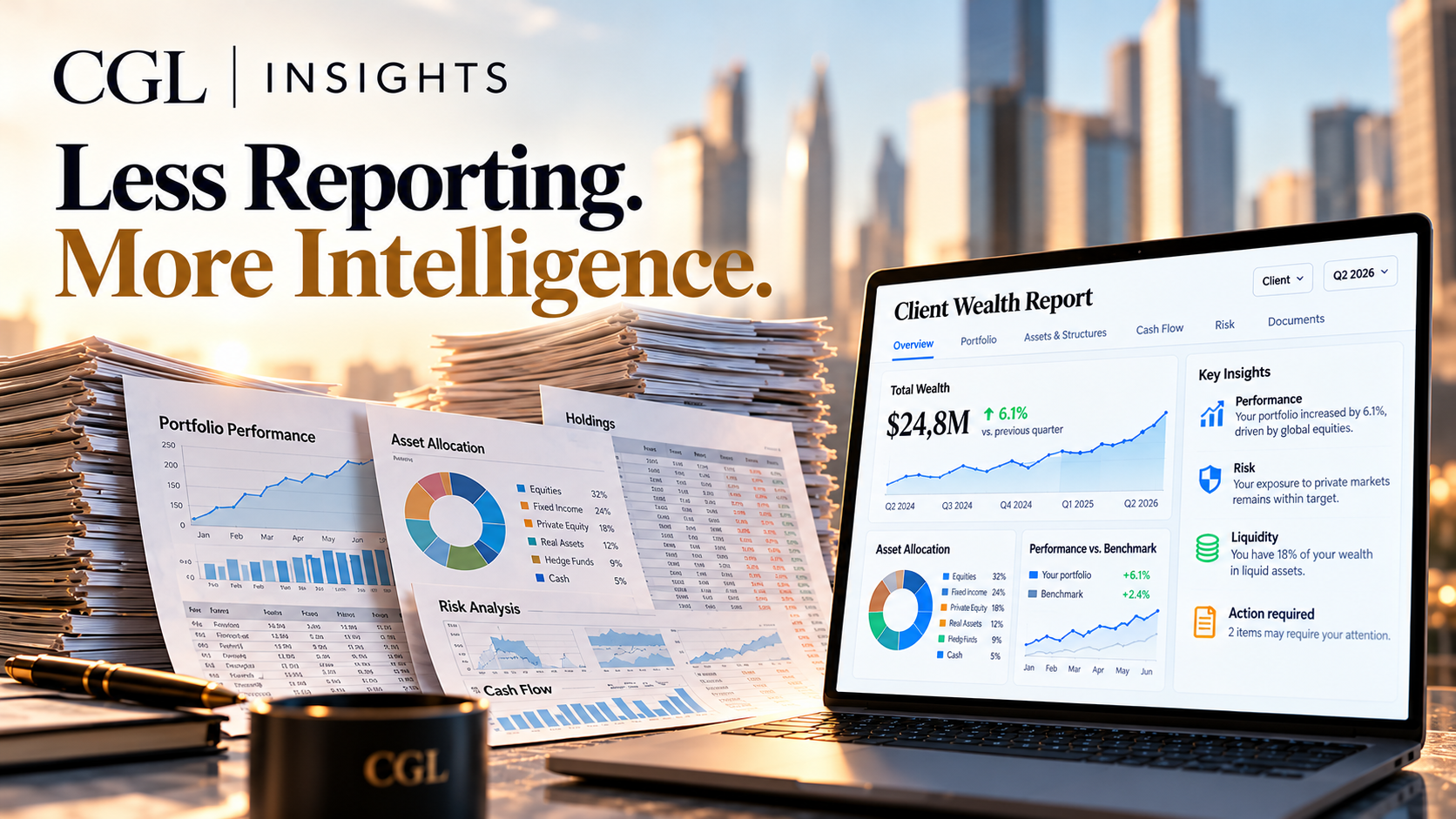
Wealth management has spent years becoming more digital. Yet one of its most basic client-facing functions — reporting — still has a problem. FactSet’s 2025 research found that only 12% of asset managers and owners believe their current reporting fully meets client needs. That is a surprisingly small number for an industry built around information, trust and long-term client relationships.
The first problem is on the client side.
Expectations have changed faster than traditional reporting. A periodic document showing performance, allocation and a collection of standard charts is no longer enough. Clients increasingly want to know what changed, why it changed, what risks they are exposed to and what all of this means for their wealth. They also expect this information to be more personalised, transparent and available when they need it. PwC says investors expect “timely, structured reporting and a clear statement of the risks they face.” CFA Institute points to demand for real-time access and more frequent digital engagement, while EY identifies a direct demand for “more transparent performance reporting.”
In other words, the problem is no longer simply how to report more information. It is how to turn increasingly complex financial information into something personally relevant and understandable.
The second problem is on the wealth manager’s side.
Doing this for one client or a limited number of operations is possible. Doing it consistently across hundreds or thousands of clients, entities, assets and transactions is much harder. Wealth reporting rarely relies on a single source of information: data may sit across banks, custodians, investment platforms, private assets, corporate and trust structures, accounting systems and documents. At the same time, every client — whether served by a wealth manager, adviser or family office — may require a different level of detail, structure and reporting logic. FactSet found that 70% of firms identify data availability and quality as their primary reporting challenge, 60% still struggle with insufficient automation, and 70% find customised reporting moderately to extremely challenging.
This creates two opposing pressures: clients increasingly expect reporting to be more individual, understandable and immediate, while growing complexity and fragmentation make that reporting increasingly difficult and expensive to produce at scale.
This is where AI starts to change the equation.
The most immediate opportunity is automation. Reporting involves a significant amount of repetitive work: collecting information, preparing commentary, summarising changes and adapting the output for different clients. Deloitte suggests that GenAI can reduce the production of bespoke client reporting packs from hours to minutes. But saving time is only part of the opportunity.
The more important change may be personalisation at scale. CFA Institute argues that wealth management needs to “scale personalization while preserving trust,” while Avaloq’s 2026 research found that 76% of wealth professionals believe AI could help them provide more personalised client service. Instead of producing the same standard report for every client — or spending significant human time customising each one — AI can potentially interpret the same underlying data differently depending on the client, their assets, structures, objectives and information needs.
This is already moving beyond theory. BlackRock’s Aladdin Wealth, for example, uses AI to combine portfolio analytics, market insights and client-specific information and turn them into personalised commentary. The important point is not simply that AI can write the text. It can help translate increasingly complex financial data into an explanation relevant to a particular client.
And this leads to a more fundamental change: the report itself may eventually stop being a static document.
Instead of receiving a 30-page report and searching for what matters, a client or adviser could interact directly with the underlying information: What changed since last month? Why? Where is my largest risk? How much liquidity do I have across my structures? What requires my attention? For complex wealth — involving multiple portfolios, banks, private assets, companies or trusts — this could be particularly significant. Reporting starts to move from periodic information delivery towards an ongoing conversation with the data.
There is, however, an important limit. Wealth reporting deals with financial information where accuracy, consistency and accountability matter. BlackRock’s approach is therefore not AI-to-client: AI prepares the commentary, while the adviser reviews, edits and approves it. The likely model is not the removal of the human layer, but a change in where human expertise is used.
So perhaps the future of wealth reporting is not simply about producing the same reports faster.
At GGL we strongly believe that AI may change what a report actually is: from a standardised document produced periodically for the client, to a personalised and interactive layer between increasingly complex wealth data and the people who need to understand it.
02.10.2026